Draught Guardian · Hospitality tech / IoT
Draught Guardian
A hospitality-tech startup that monitors beer pours, volumes and loss asked BMEC for a modest hardware revision, essentially a more robust version of its existing device. Our assessment was that a revision would not address the underlying problems.
- Client
- Draught Guardian
- Engagement
- Discovery + full redevelopment
- Delivery
- PCB + firmware in ~6 weeks
- Scale
- Hundreds into thousands of units
- Cost impact
- ~10x unit-cost reduction
The challenge
The device connected over GSM, a choice made before Wi-Fi was reliably available in venues. It was the largest single cost driver, requiring SIM management and a data plan for every deployment. Installed under bars and in fridges, the units also failed repeatedly from water ingress.
The client had come to accept both constraints and asked only for the existing design to be made more durable.
The client expected a minor revision. We proposed a redesign, and the commercial impact was an order of magnitude greater than the original brief would have delivered.
What we did
- 01
Questioned the brief
A structured discovery phase showed that the GSM module was the most expensive component and that the original reason for it no longer applied. We recommended a full change of architecture, which was more than the client had anticipated but addressed the root causes.
- 02
Re-architected the product
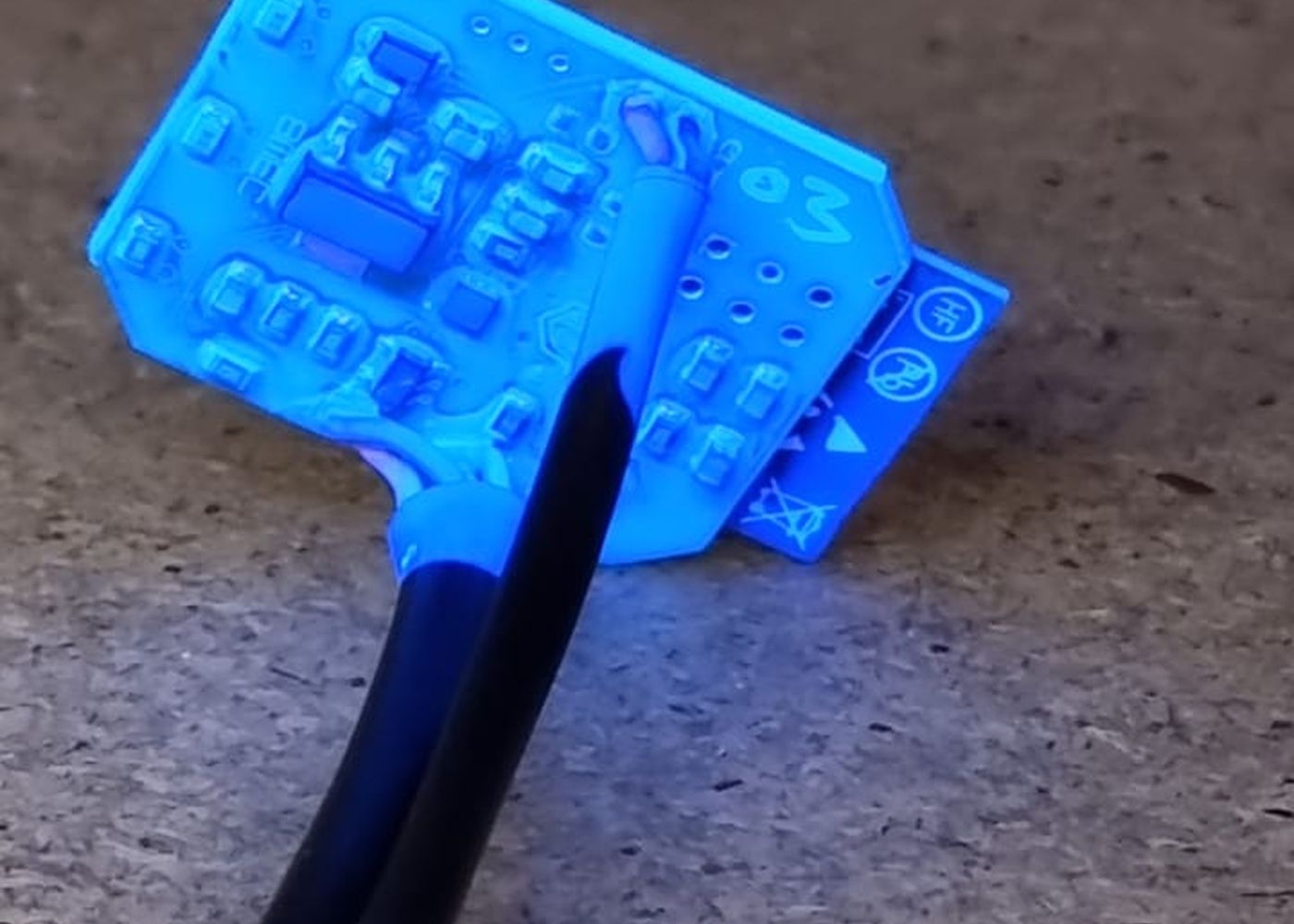
A custom ESP32-based PCB combined Wi-Fi and Bluetooth in one chip and removed the cellular module. A Bluetooth-connected mobile app replaced the fragile embedded interface, and a fully potted enclosure eliminated water ingress.
- 03
Built on proven libraries
Our Deep Core firmware libraries (Wi-Fi, Bluetooth and MQTT stacks already validated in other field deployments) went directly into the product, along with over-the-air updates for the whole fleet.
- 04
4-to-1 revision
A later iteration replaced the single-flow-meter node with a four-meter variant, reducing the cost per monitored tap by a further factor of 2 to 4.
More work
Other case studies.
Start a conversation
Tell us about your project.
The founders take the first call themselves. We will give you a clear view of what the project involves, including whether it is feasible.